He Huia Kaimanawa
Two things were taken from Aotearoa. One is coming back.
02 / 1867
1867
The Native Schools Act made English the language of the classroom.
Children were punished for speaking their own. Strapped, shamed, sent home to parents who were told to help.
The policy worked. That is the part that is hard to say.
03 / The erasure
It went word by word. Each one replaced with English.
reovoice
whakapapaancestry
karakiaprayer
ingoaname
04 / The silence
A generation was not given the language.
They could not pass on what they did not have.
They are the middle of this story. Not a footnote in it.
05 / 1907 the last huia
1907
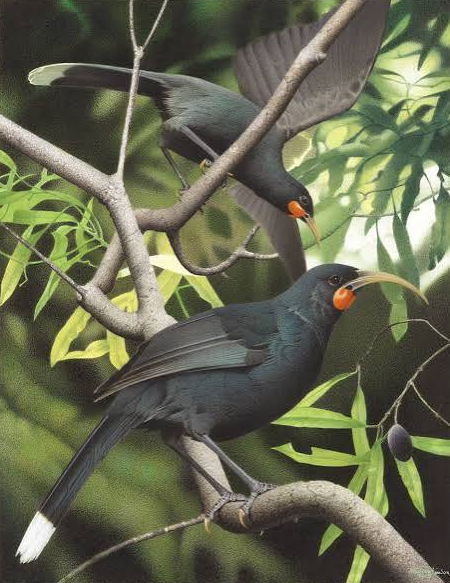
- Species
- Huia
- Last seen
- 28 December 1907, Tararua Range
Its tail feathers were taonga. Then they were fashion. Wanting it was enough to end it.
06 / The argument
The huia
Destroyed by being wanted.
Te reo Māori
Destroyed by being forbidden.
Opposite mechanisms. The same silence.
07 / The turning
-
1972
A petition of thirty thousand signatures, carried to Parliament by hand.
-
1982
The first kōhanga reo. Kaumātua in a room with tamariki, speaking.
-
1987
An official language of Aotearoa New Zealand.
None of it was given. All of it was taken back, by whānau, one room at a time.
08 / Now
Adults are learning the language of their grandparents.
At night, after work, a whole generation is learning to speak again.
They learn in public.
They get words wrong.
They stop halfway through sentences and start again.
Their children are learning too.
At home.
At school.
In the same families.
Sometimes the child knows the word first.
Sometimes the parent does.
Sometimes neither of them does, and they find it together.
That is the story.
Not one generation passing language cleanly to the next,
but several generations rebuilding it at the same time.
Learning what was interrupted.
Returning to what was carried.
Making sure it travels further this time.
It may be the largest part of language revival
and one of the least visible:
whole families learning their way back together.
09 / The chain
- Those who held it
- Those who lost it
- Those taking it back
- Those being given it
10 / Into the work
He Huia Kaimanawa
- Performers
- Seven
- Generations
- Three
- Duration
- Sixty minutes, in te reo Māori
- Direction
- Tūī Matira Ranapiri-Ransfield
Some stories do not need translation to be understood.
In Melbourne, few in the room spoke te reo Māori. Fewer still knew the history behind what they were hearing.
But they understood the loss. They wept.
And the next night they came back, bringing their friends, their whānau, and more people to witness it.
Perhaps the question is not whether our stories can cross language, culture or distance.
Perhaps it is why we ever believed they couldn’t.